Friday, December 30, 2022

Teaching and Assessing Writing in the Elementary Classroom


Teaching and Assessing Writing in the Elementary Classroom


Young girl writing in an elementary classroom

First Steps to Teaching Writing in the Elementary Classroom

If you find yourself intimidated by teaching writing in the elementary classroom, have no fear! I am here to help. Teaching writing, in my opinion, is one of the hardest subjects to teach and requires patience, thoughtfulness and preparation. In this post, I'll walk you through the steps of preparing to teach and assess writing in your elementary classroom.

Step One - A Writing Prompt

Determine your students' writing abilities. How? Assign a high interest writing prompt to pique their curiosity. It should be something about them, for example: I Like _____ Better than ______, or My Three Favorite Foods. It doesn't have to be that overtired narrative of What I did Over Summer Vacation (although, it has its place at the beginning of the school year). Make it something they're willing and excited to write about -- for more than a sentence or two. 

Step Two - Assess the Writing Prompt

After students have completed their writing, collect them for review. You aren't going to grade these. You're going to assess them for strengths and areas of need. These completed prompts will give you your initial writing lessons simply based on the areas of need students show. This checklist is a lifesaver when it comes to helping you assess student writing samples. 

writing checklist for 2nd grade
Use this checklist to assess student writing samples throughout the school year.


Step Three - Plan for Instruction

Make a list of the top three areas of need and build those skills into your writing workshop mini-lessons. More than likely, writing complete sentences -- robust, full and rich sentences-- is going to be one of the areas of need. This is where a resource like my Sentence Editing saves the day. It takes just a few minutes a day for students to edit a bland sentence by turning it into a sentence with at least 7 words. You'll be amazed by the depth of sentences your students can write when you model how to add more rich language to their sentences!

Step Four - Hold Regular Writing Conferences

Yes, I hear you saying this is going to take some time. It is time well-invested! And, once you get rolling with a system, it won't take as long as you think. Set aside one day a week to meet with a small group of students during the writing block, or set aside more than one day -- whatever works with your schedule. Sit down and have the child read the piece to you. (Make a copy of it for your file.) Discuss major strengths as you go through the checklist. Make note of one or two strengths you want to celebrate with the child on the anecdotal notes form. Also, as you listen and follow along as the student reads, you'll pick out one area of need to use for a goal. Ask the student what he/she thinks is the most important thing to improve. You may have the same skill in mind. I always have the child dictate the goal to me as I write it for them. I also write it on a sticky note to put in the child's writing folder. It remains there for them as a reminder. 

Investing 5-8 minutes per student every month is an excellent way to see the student's growth and hone in on areas of need. It also helps strengthen your relationship with your student. Give it a try. Email me at msezzelltpt@gmail.com with questions or celebrations. I'd love to hear how this system works for you!

Anecdotal Notes for Student Writing
Example of anecdotal writing notes taken during student writing conferences


See Your Students' Writing Improve Over Time

As you continue to focus on the data the writing checklist and prompts provide you, implement more of the areas of need into your writers workshop or writing mini-lessons. Aim for collecting at least two work samples each grading period to help you determine the focus of lessons. It could be writing complete sentences, sentence punctuation, or writing sentences using richer vocabulary. With consistent attention to students' needs and including those concepts and skills in your writing workshop, you'll discover your students will make progress over time!

For more information on the prompts I use along with the checklist for identifying strengths and areas of need, click here


As always...

Happy and Healthy Teaching!

Susan
Grade 2 Hullabaloo


Wednesday, September 14, 2022

Build a Classroom Community with Students


Building a Classroom Community With Your Students

Are you looking for ideas for building a classroom community with your students? Building community is an essential part of classroom management for teachers. Teachers are always looking for ways to get to know their students. Of course, you've learned students' names on the first day! That's a survival skill, isn't it? To build a relationship with your students, it's important to know more about them as quickly as possible. 

One Way to Build Classroom Community in Your Classroom

Here's one way to build a classroom community.  It takes a few seconds each time you need to call on a student and it helps you build a stronger relationship with each of your students. 

Have your students complete this VIP list of likes, loves, wants, wishes and things they want to do. Put them on a snap ring and keep them handy when you're calling on students. Flip through and say, "I'm looking for someone who wishes he had a red bike AND can play basketball." By acknowledging their interests and wishes, you're showing them they matter to you. 

VIP List for Students


Gain Students Respect Through Building Community in the Classroom

You're gaining their respect and showing them you care. The few seconds it takes to flip through the VIP lists is worth it to build a stronger classroom community with your students. Try it. Email me to tell me how it goes! msezzelltpt@gmail.com

Click Here to get a free sample of the full resource!

Grab the full resource here:

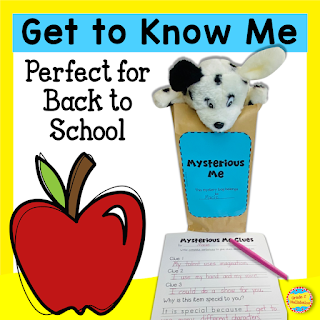
Get to Know Me


Happy and Healthy Teaching!

Susan
Grade 2 Hullabaloo

Saturday, July 16, 2022

Back to School Writing Prompts


Back to school is upon us! Are you pacing yourself to prepare all the things? Remember, deep breaths. I am here to help with tips for back to school writing prompts. They're easy, high interest and easy to prep. 

Most second grade writing begins with a focus on narratives. Narrative writing lends itself to lots of writing about summer vacation, personal experiences, and fun days with a relaxed schedule. These are great for writing! 

Extend these writing opportunities with monthly events or holidays you can use for your narrative writing lessons. Days like Friendship Day, Ice Cream Sandwich Day, Book Lover's Day, or Dogust Day - a day in August when shelter dogs are celebrated -- are highly engaging to second graders and easily adapted for narrative writing. I have assembled a collection of these events for August and September. It is linked below.

How I Organize Everything

I begin by making every student a writing folder for the month. It consists of a title page, about the author page, writing survey, and the graphic organizers for the prompts I plan to use that month. 


I include a copy of the student rubric, a writer's checklist and all the graphic organizers for the month. We store these folders in a basket in our classroom.


How I Rotate Groups

During my writing lesson, I teach a mini-lesson that's usually no longer than 6-8 minutes and then students rotate through groups -- Meet with the Teacher, Work Independently, Work with a Partner. These rotations last about 12 minutes. During this writing block, each student is working on the same piece of writing; each rotation has a different purpose. 

Opportunity to Assess

Meet with the Teacher is a time for me to identify any hurdles a student may be having and record that on the anecdotal record form. Working independently is a time to building writing stamina and focus. Working with a partner is a time to give feedback and help a friend edit and revise. 

Example of Writing Checklist -- an excellent way to monitor student progress


All these tools and forms are available in the Back to School Narrative Writing for August and September found in my TpT shop. 


Happy and Healthy Teaching!

Susan


Monday, April 25, 2022

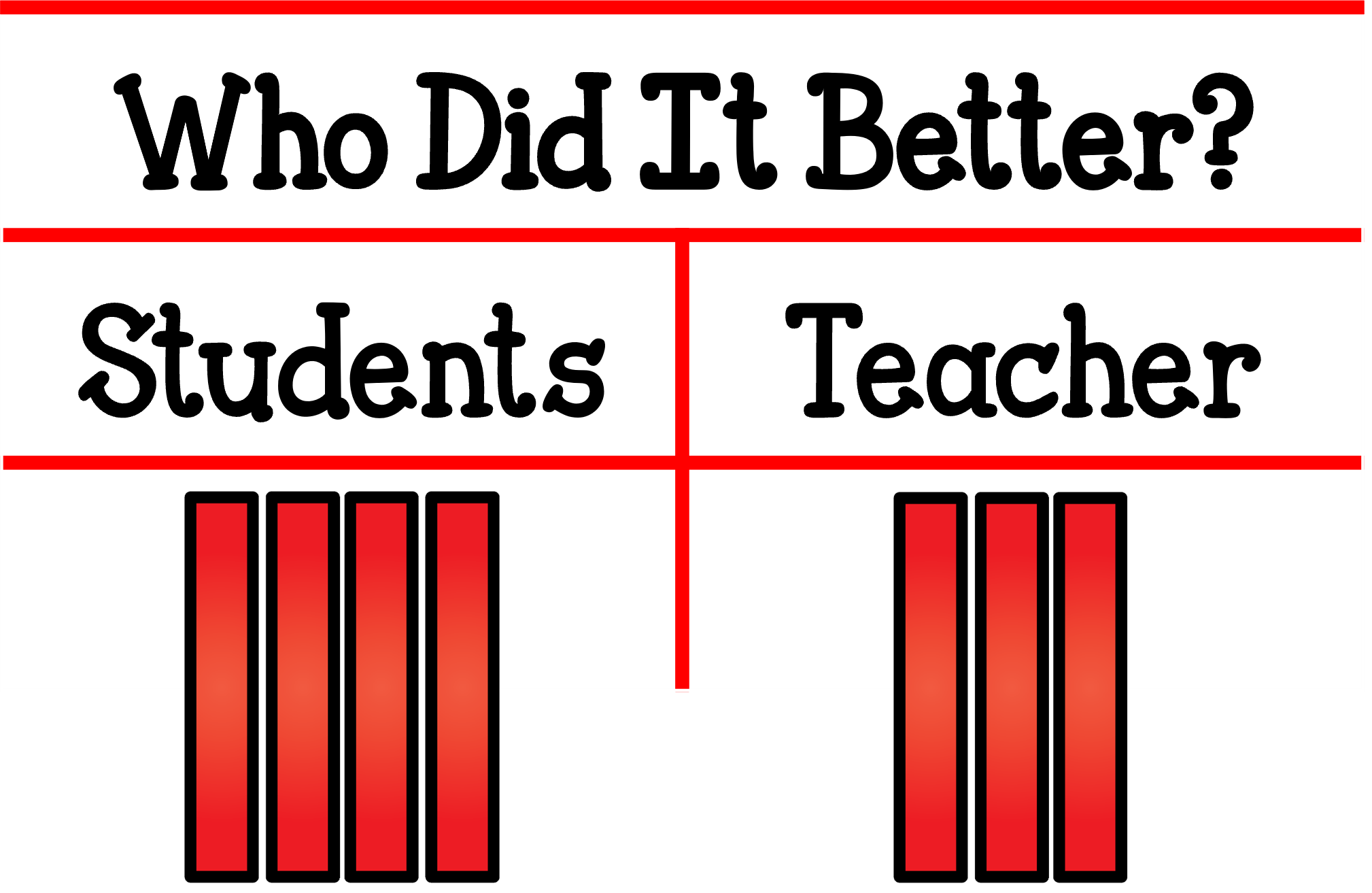
Class Management - Who Did it Better?


Who Did it Better?

Goal: Who can get to five tally marks first - students or teacher?

When it comes to classroom management, I have tried all the things. There are some years classes push my limits of patience. Do you ever find yourself in this predicament? Yes? You're in the right place!

In my last post, I shared one classroom management strategy. I'm here to share another strategy with you today. This one is a bit different in that it doesn't require anything except your whiteboard and a marker. That's all!


This management strategy is from Whole Brain Teaching. If you ever get an opportunity to attend a training, GO! It is well worth your time to attend this training! Plus, when I attended, it was FREE. Hopefully, it still is free. 

Here's how this approach goes:

Pick a behavior you want students to reinforce. Let's say you expect everyone to give you their eyes the first time you signal them. Make sure everyone understands this "game" before you begin. They're going to think of it as a game no matter what you call it. There are several things you can say. If someone isn't ready when you signal. Here are a few things you can say:

"Oh, no. I noticed someone had a tough time getting his eyes ready to listen. Maybe next time everyone will be ready. Remember, when I signal, everyone's eyes should be on me." Give a point to the teacher.

"Wow! Almost everyone was ready. Next time, I think everyone's eyes will be on me. Way to hustle!" Give a point to the teacher. 

"Awww, you almost made it. I noticed a few people got distracted when they tried to tell someone to look at me. It's great you were trying to help." Give a point to the teacher.

Notice, I gave positive comments and gave the teacher the point. I am really picky because I expect everyone to display the behavior consistently. If I have a student who struggles to maintain eye contact, I take that into consideration and make allowances especially if there is an IEP in place. There are always exceptions when IEPs are in place. 

If the students display the behavior, I congratulate them and give them their point. I do not make a huge deal about it. Why not? I don't make a huge deal because the behavior is what is expected of them on a daily basis. It is not above and beyond what is expected of them. 

When they get five points before I do, they get a small celebration -- one minute of free time to get a drink of water, go to the restroom, talk softly with their friends, dance, or take a nap. Yes, they may do any of these things for one full minute. I set a timer and let them have their free time. When the minute is over, we get back to work. You can choose what the celebration is or allow the children to help you choose. 

Sometimes, it's a smaller celebration like a cheer or a quick song. It doesn't have to be a grand thing. It might be an extra five minutes added to recess once a week if they consistently beat me. The most important thing is to be consistent in holding students accountable with the behaviors I choose to reinforce on a daily basis. 

If you have comments, please leave them below. If you have questions, please reach out to me -- msezzelltpt@gmail.com

Happy and Healthy Teaching!

Sunday, January 30, 2022

Classroom Management Punch Cards


Punch Cards – The first in a series of classroom management tips for elementary teachers. There is a free download as your 'celebration.'


There comes a time with every class when students become extra chatty, fail to focus, get cranky with one another, and are slow to follow directions. Their behavior is just plain sloppy. It also seems to begin during a long stretch of weeks with no holidays, which leaves you on the verge of pulling out your hair! Am I right?


Whose job is it to correct those behaviors? Yes, it is the teacher's job along with (hopefully) a strong school-home relationship. Supportive administration is a must as well. 

Yes, there are extreme cases. 

Can we say PANDEMIC? UNDIAGNOSED MEDICAL ISSUES? MENTAL HEALTH ISSUES? ALLEGED ABUSE? LACK OF FOOD AND MEDICAL CARE?

Yes, we all know there are exceptions, and I am not here to make you feel worse. 

Some parents struggle with parenting. Yes, last year’s teacher had a completely different management style. However, when your students step into our classrooms, it’s our responsibility to set clear expectations, model them, hold children to those expectations, and act accordingly when they meet them or do not meet them. It’s easy to celebrate the good choices. Not-so-good choices? Not so much.


The buck stops with you US! After all, we spend large chunks of time with them, it falls on us to meet this challenge head-on.


None of the tips (gimmicks) in this series will work if we don not have a clear picture in our minds of what students are expected to do.We MUST manage with confidence, communicate expectations, train students to perform expected behaviors, and respond accordingly when desired behaviors aren’t displayed.
 

I was that teacher during the first couple of months of my first year of teaching. The students were loud. They were wild. They didn’t do anything I asked of them. I was miserable, because I didn’t stick to my guns. AKA hold them accountable; I was afraid to cross them.


Are you looking for advice and useful strategies to help with your classroom management? If you are, great! A reminder -- If you are, it does NOT mean you are a bad or weak teacher. I believe it means you are dedicated to honing your classroom management skills. You simply need to add more tools to your teacher toolbox.


Are you ready to stick to your guns and be consistent? Even when you know parents are going to email? Even when little Belinda pitches a fit?


Yes? Keep reading!

This advice comes from a 28-year "seasoned" teacher who used to blow a whistle to get her first class's attention. That became old very quickly, so I decided I was going to change it. 


Let me tell you, I earned every cent of my paycheck that year! I realized quickly I had to have a good system to help get my third graders on track. I used my supervising teacher’s chart system and it worked wonderfully while student teaching. However, her students had been trained and knew the expectations. My students didn’t, so, I read, researched, and tried many strategies and gimmicks with my classes. Below is one strategy (gimmick) I used that worked. I call it a gimmick because it’s so simple some people question them, but they work! IF used correctly and consistently. Besides…


It’s not a gimmick if it works!

Strategy #1 – Punch Cards

Yes, I know what you're thinking: Punch cards are as old as the hills. Yes, they have been around for some time, but when used properly and with consistency, they WORK!


Back in the early days, I used index cards. It’s all I had! Luckily for you, I’ve created two cute punch cards and a celebrations (rewards) page for this tip or gimmick.


Here are a few ways to use punch cards:


1. Start with the five-punch card to have students rewarded more quickly. Discuss one or two expected behaviors. Focus only on those one or two. For example, lining up quietly and giving you their attention when you signal. 


2. Write the expectation(s) on the board so everyone knows the one or two areas of focus. If things are particularly tough, choose only one area of focus. Practice the behavior. Model, Model, Model! Practice! Practice! Practice! Punch! Punch! Punch!


3. Ask a few students to show the class how to get in line. As they do this, comment on the desired behaviors. Be sincere, not sugary sweet or condescending when you make your observations. Speak calmly. There is no reason to raise your voice unless there is exciting news or you’re reading with fantastic expression during read-aloud. For example, "I notice Tina is walking slowly. She is meeting our expectation to line up carefully." Or, "Did you notice how Tannish let Silvie get in front of him? That was kind and it shows he knows his place in line." (This applies if you have your students line up by roster number or some other consistent way.)


a. The first expectation I practice with students is an attention-getter. I use Whole Brain Teaching’s “Hands, Eyes” attention getter. I say, “Hands, eyes,” and the students repeat it and while doing so, they put their hands in their laps and their eyes on me. I might say,” I saw Jose’, Miracle, Marcy and Juan’s eyes first. Gosh, if I had felt everyone’s eyes, someone would have received a punch!”


b. If everyone doesn’t to it, we repeat it until everyone knows that cue means stop, hands in lap, eyes on the teacher. I never single out students who aren't getting it. I might go stand by that student's desk and use proximity as a subtle hint. I say, “We’re going to have to do it again, because I need to know in my heart that EVERYONE can do this EVERY time they hear it.”


c. An easy way to introduce this is to gather everyone on your carpet area and have a small group show the correct way to do Hands, Eyes or lining up. After a small group shows the correct way, ask them to demonstrate the WRONG way to line up. No kidding. Include the friend you’re often reminding to walk or pay attention. He/she will love doing it the wrong way. Don’t worry. Keep reading. It gets better.


d. After the chaos calms, ask questions, such as: “Did you notice anyone walking to get in line? No? Neither did I. Did you notice anyone lining up quietly? Neither did I.” “Do you feel as though everyone met the expectation to line up (or give hands in laps and eyes on the speaker)?” Neither did I! Did it feel a like chaos as our friends were doing it the wrong way? 


e. Ask the same students to show the correct way to get in line after they have shown the wrong way. Again, comment on the desired behaviors – especially that child who struggles to get in line properly. For example, “Did you notice Matthew was so focused to meet the expectation to line up safely and quietly. Great choice! Are you proud of your choices? I am too!”


f. Finally, explain when you see friends who line up correctly – silently and calmly, you’ll be punching their great choices card. Describe the reward (I call them celebrations) students will receive once they have five punches. 

NOTE: You can predetermine celebrations or have students make suggestions. I usually have a couple of non-negotiables like a homework pass, sit at the teacher’s desk, or visit the principal, and then we agree on two or three more from class suggestions. This is a great time to discuss reasonable suggestions!


g. Once you implement punch cards, make a big deal when a student reaches their five punches. Be an eagle-eye when it comes to students who struggle with expectations. Those shy or quiet students are easy to miss! Keep a class list nearby to make sure you’re watching for everyone. When someone reaches five punches, celebrate, write a good note on the card and send it home to parents. Give the child a new card. 


h. Repeat the steps with the second expectation, but not until you are satisfied everyone is meeting YOUR expectation for the first one. Repeat the steps.


i. After a few weeks of doing this, you won’t have to spend as much time with the wrong/right way activity. The children will know the routine. And, yes, you’ll need to have refreshers on those ‘line up quietly’ or ‘no talking in the hallway’ expectations.


This “gimmick” works if you believe in yourself, are dedicated to making a difference in your students’ behavior, and want to take steps to end the behavior management tug-o-war! Besides, your hair is way too cute to yank out! 


Want the freebie? Download it here!

Behavior Management Freebie


Stay tuned for the next in the Classroom Management Tips series -- Who Did it Better? 

Sunday, February 19, 2017

Use Music to Engage and Energize

It's that time of year when school holidays are scarce. The weather is yucky, which prevents outside recess. How do you manage those wiggly, squiggly students who need to move? Use these suggestions and resources for using music and music videos to engage and energize your students.

Music is important in our culture. It moves us, makes us want to shake our booty, and evokes great memories. Why not take advantage of the shaking booty part with your students? There are endless options for helping students burn off those wiggles and get the oxygen surging to their brains to improve focus. Here are a few of the best ones.

Pandora -- You can search and set up your own playlists on this free site. One of my favorites is KIDZ BOP Kids on a channel called Children's Dance Radio. My second graders love it, too! 

YouTube -- There are boundless possibilities here! One that is kooky and gets kids moving is The Hamster Dance. My kiddos love the hamster voice. There's also I'm Gonna Catch You. There are cute actions to go with this one. 

**Important Note -- Pop your YouTube link into ViewPure and it will "purify" it. That is, it will take off the advertisements. No more sprinting across the room to hide ads that are not appropriate for kiddos. Follow the instructions on the ViewPure page to learn a shortcut for the process.


Go Noodle -- I'm sure you've heard of this one. It's probably my students' favorite. There are so many options -- not just for wiggling, but also focus, and academics. The site is searchable by category, duration, energy level, and favorites. One of my students' favorites is Moose Don't Allow. It's 2 minutes, 40 seconds long, which is perfect for a transitional wiggle break. There are longer movement videos that are perfect for inside recess. Moose on the Loose is an example. It's about ten minutes long.

iPad/iPhone -- I have an old iPod Touch. I use it solely for music in my classroom. I bought a speaker base for it and I downloaded songs and created playlists for transitions, wiggle breaks, calm times, and special songs for unique classroom activities. 


How I Use These in My Classroom

One unique classroom activity is when my students take their Friday Mad Minute timed test. I play the theme from Fox Sports. It's a little over one minute long, which is just long enough for that straggler to find his pencil or return from the restroom. When they hear the music, they know it's time to focus. It helps get them pumped up for this test and creates a classroom tradition that my students remember for years. They'll ask if I still do it when they pop in to visit me in later years. It's a small thing that makes a big difference with the children. 


Another example is Pachelbel's canons for calm, study time. The music is beautiful and the children are exposed to classical -- sometimes for the first time. I do this for the calming effect but also to present different genres of music to my children. I turn off most of the lights (I have lamps scattered about my room) and put it on when my students are writing or during reading block. It helps me to calm down, too! I have it on my iPod Touch, but it's also on YouTube. The linked one below is a one-hour version of Pachelbel's Canon in D -- you may recognize it from some popular movies and from weddings. It's beautiful!


Clean-up is definitely a time to have a signature clean-up song. Somehow, through all my years of teaching, I never learned the Clean-Up Song! Not to worry -- I found one that is the signal for cleaning up in my classroom. This Tidy Up Rhumba has a great beat and fun lyrics. Give it a listen. I think you'll like it! My second graders do!


In addition to the YouTube videos referenced above, I love to find music or videos to fit special themes in our classroom. For example, when we are studying animals and their habitats, I'll play this forests sounds one. It has a peaceful forest scene and sounds of nature. I use it when students are reading and researching or working in groups. I tell them, "If you can hear the music/sounds, your voice level is perfect." 


If we're doing our snow dance, I'll put on this one during read to self time. We rarely get snow here, so seeing it on the ACTIV board is the next best thing.


Finally, during December, I'll use this one when we're learning about holiday customs around the world. What's more relaxing than reading and learning with a warm and toasty fire burning in the fireplace? 


How do YOU use music to engage and energize in your classroom? Leave a comment below! I'd love to hear your ideas.

Wednesday, February 8, 2017

No Valentine's Party? No Problem!

I love the enthusiasm of children when Valentine's Day rolls around. They *love* to love their friends, their teachers, and just about everyone else. Not kissy-face love, mind you. It's a bigger love, one that is pure and unconditional. Have you noticed how excited they get when you read their valentine? Precious!

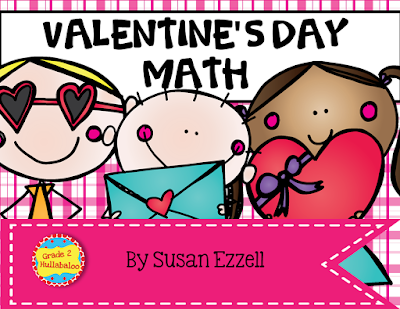
In the spirit of love and Valentine's Day, I have created a set of Valentine's Day Math activities just for second and third graders. Even if your school says no to having a Valentine's Day party, these rigorous subtraction with regrouping, data collection and graphing activities will give your students a workout! The corny riddles are fun, too!


Valentine's Day math activities for second graders.


It's not difficult to integrate Valentine's Day activities into the day. It is important to make sure parents and administrators (even fellow coworkers) know there is an academic foundation to your activities. Two to three weeks before February 14, I send an email to parents letting them know the children may bring valentines; that we will be using our valentines enhance our learning activities. I also send home a class roster. The passing out of cards is easier if kiddos simply write the 'from' part on each one, but I think they enjoy writing their friends' names on each card. I am not going to discourage them from anything that gives them penmanship practice.

I use the valentine riddles as morning work on the days leading up to Valentine's Day. I like for my students to try it independently. Once they have tried it, I go over it and demonstrate how to crack the code. I model with think-alouds,  trial and error, and calling on my math toolbox skills (in my head).  It's important for students to learn to read directions and make mistakes. I believe this is one of the big learning hurdles in second grade -- growing more independent.

I follow up with the I Have, Who Has...? game. It gets my second graders up and moving. It also gets them thinking! Paying attention and processing the information on the card is brain-building! The children usually beg to play I Have, Who Has...? more than once. Who am I to deny them a chance to have fun and engage in problem solving! 

We wrap up our morning of math with the Valentine Treat. I give them a Little Debbie Iced Brownie and they begin data collection. (I found the Little Debbie Iced Brownies at Dollar General. [no affiliation]) Students create a replica of the brownie, tally-mark them, and answer problem solving questions about the number of sprinkles. Talk about sweet engagement! Our math lesson has been filled with love, learning, and sprinkles! 


2nd grade Valentine's Day Activities

How do you integrate Valentine's Day into your day? Leave a comment! I am always curious to know what other teachers do on this fun day.

Here's hoping your Valentine's Day is filled with love, kindness, and sweet treats!

Sunday, December 11, 2016

One More Week

Hello and happy holidays! I get so stressed out with wrapping up the calendar year that I sometimes forget to enjoy these last 7.5 days with my kiddos. So, I am taking a deep breath and working hard to take each day as it comes. You know, one day at a time, plus a lot of cleansing breaths. We. Can. Do. This!

In an effort to heighten the holiday spirit, I have joined with over sixty (60!!) other creative teachers to bring you Jolly Good Deals. It begins tomorrow! How is that for ramping up everyone's holiday spirit?

Check out the exciting special offers for each day this week. Psst... did you will see that we are giving away SIX (6!) Teachers Pay Teachers gift cards! You'll want to enter, for sure! The winners will be announced Friday. Each day, search for the hashtag phrases to find great deals on high quality products for your classroom.


Jolly Good Holiday Deals for Teachers - 2016
Visit my Facebook page for the daily hashtag deals!

We even have a holiday gift guide for you. Hop over to my TPT shop to download the FREE gift guide and mark your choices. There are going to be opportunities to grab some GREAT products at super prices.


Holiday giveaway


Be sure to enter to win one of the $50 TPT gift cards! Check out the Rafflecopter entry below.


Thanks for popping by my blog. This week, we're making parent presents. I'll share those soon!


May the force of patience and deep breathing be with you this week.  

Friday, November 25, 2016

Holiday Rush Tips, A Freebie & Giveaway!


Oh, can you feel it coming? The December rush of activities, programs, crafts, and... um... teaching has to fit in there somewhere? I get a little tense just thinking about it. However, I want to ENJOY the activities, programs, crafts and lessons with my kiddos. So, here are a few tips, a FREEBIE, and a chance to win a $25 gift to Target! All this is to help you prepare for the sprint (this one isn't a marathon like some say) that is December in elementary school.


Win a $25 gift for teachers
Win a $25 Gift Card! Enter Below.

In the spirit of giving, and to show you how much I care for you, dear teacher blog reader, I am participating in a blog hop sponsored by Keeping Up with Mrs. Harris and Notes from the Portable. Try these tips, grab the Solve It, Santa! freebie, and enter to win a $25 Target gift card!

First of all --

Take care of Yourself. 


  1. I call it putting my own oxygen mask on first as they say on flights. If you aren't healthy and well-rested, how can you be at your best? Harder said than done, isn't it? I suggest you make two promises to yourself.
  2. I promise to approach plans for December with a mindset of reasonableness. Yes, reasonableness applies to planning (not just strategies in math)! Do you have time to create 24 adorable sock snowmen complete with pompom ear muffs? Probably, but maybe a smaller (and less time intensive and expensive) gift is more reasonable for your students, not to mention presents for room parents and coworkers, and office staff and TA's and, and, and... 
  3. I promise to take time for myself. Give yourself the night off at least once each week in December. Weekends don't count! Yes, you CAN do it. Whatever is on your to-do list CAN wait. Find the time to go to your real or imaginary happy place. My imaginary one is below -- Belize! 
Teachers find time to relax during the holiday rush
Take time to find your happy place during the holiday rush!

Enlist Help.

  1. In my school, parent volunteers are plentiful. However, I have been in schools where there was little to no parent involvement. Do you need construction paper cut into certain sizes for those reindeer, Santas, menorahs, or snowmen crafts you have planned? Create an example of exactly how you'd pieces cut  and write EXAMPLE on it. Add notes to them if there are any complicated parts.  Email your parents to ask for volunteers to cut them at home. Maybe there is an older sibling in the home who would love to do it. Even if you have very little parent involvement, if there is one parent you can call on, you might build a great relationship with her/him. It could spark others to offer to help. You won't know unless you try.
  2. Have you considered creating tracers for those craft projects? I love using tracers with my second graders. It helps with fine motor skills, and all I have to do is have the construction paper laid out for them to grab. If you use tracers (use card stock), it is important to teach your students to place the tracer near the edges of the paper. I demonstrate how plopping that teeny tracer in the center of the paper is wasteful. I also teach my kiddos to flip over the piece they have traced, so that the pencil tracing lines don't show in the final product. (Yes, I'm a little OCD about these things!)
Teacher Time Saving Tips
Clearly, these tracers have been used many times. Print once, use many times!


Tracers help teachers save time
My students used tracers to create these turkey glyphs. 

     3. Finally, I find a big basket or box and put a label on it -- PAPER SCRAPS. That way, if children need a piece of black for Santa's boots, they should look in that box before taking a new piece of black paper. This is a lifesaver when one of your littles comes to you asking for a red piece of paper when you're involved with a small group or in the middle of helping someone else. Train them to look in the scrap paper box first! 

Start early. (like NOW)

  1. Are you traveling for Thanksgiving or Christmas? Do you have a personal laminator? Print your items needing to be laminated and take them along with you. No personal laminator? Laminate at school before you go. While everyone is letting that huge holiday dinner settle, pass out a few pieces and have them help you. I plan to do this at my parents' home! I have nieces, nephews, and sisters-in-law who are going to be helping me trim during Thanksgiving and Christmas! Don't forget to bring along a few extra pairs of scissors. I'll be printing this Solve It, Santa! set of 26 addition and subtraction with regrouping story problems. 
Santa Math
Click on this image to get this free product!
  1. Almost every year, I look back and realize I forgot to do a neat craft or lesson for a particular holiday. Go through your files and make sure you haven't forgotten something you love to have your students do for the holidays. Do it NOW. While you're at it, grab this holiday 
  2. Gather your holiday books. Put a sticky note on the top of things you need for the lesson. It will help with prep. Can't find that one special book that is a must-have? Put those sweet eagle-eyed students to work searching for it. I pull up a picture of the book cover, show the children, and off they go to find it. Usually, in a minute or two, the book has been found. Do this during a transition time and make a game of it. I use my announcer voice and announce that it is time for "Let's Find this Book" and they're off!

Finally, if you've read all of these tips, thanks! I hope you've grabbed my thank-you freebie in the spirit of giving during the holidays. It's my thanks to you. I know how hard you work and I appreciate you stopping by my blog and my TPT shop! As a BONUS, grab this limited-time freebie as my second thanks to you! 


Enter to win a $25 Target Gift Card below:
a Rafflecopter giveaway


Wishing you the happiest of holidays!

Sunday, October 23, 2016

Five for Friday - 10.23.16


This week has been all about CHICKS and DUCKLINGS! It was a perfect wrap-up to our life cycles studies for the first quarter. Here are a few pictures from the excitement:
hatching chicken eggs in the classroom


candling eggs in second grade

hatching chicks in second grade

ducklings in second grade
This guy just had a cracker. He's so cute I don't mind the mess!


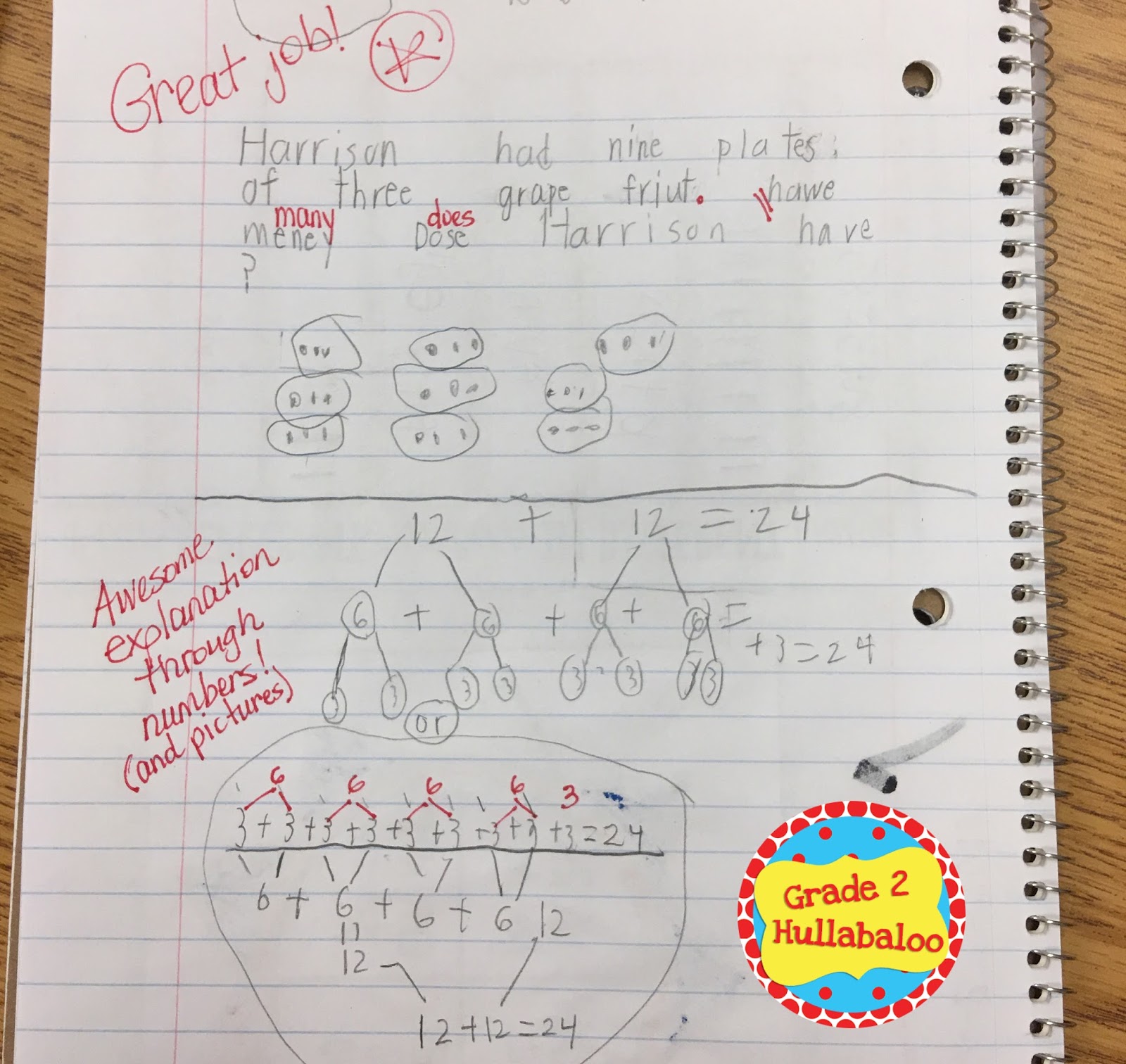
Our math lessons, the past few days, have been all about strategies for adding and subtracting. I love teaching math, and by using number talks and story problems, I believe my students are building their repertoire of skills. I recently gave my students a story problem. 

Below is one example that I thought was a great product. There was an error in the student's final answer; however, I see plenty of evidence to show the student's ability to write and illustrate the solution to the problem. A quick chat about checking final answers is all I needed to do with this child as the child is usually very thorough. I was especially impressed with some of my lower functioning students' responses. They weren't as sophisticated, but they demonstrated they were correct. Do you give your students these performance task type challenges? 


October is one of my favorite months of school! We are beginning to have cooler weather down here in Tennessee. The leaves are changing, and pumpkins and gourds are popping up everywhere. Next week is going to be a thematic week. Our second grade team is planning a 'What is Fall?' theme.  We're doing pumpkin math using 'How Many Seeds in a Pumpkin?'. 

We're also going to make button catchers to use during our science block. These nifty button catcher toys are going to be a hit with my kiddos! We are going to wrap up the week with some spiced apple cider and a reading of sensory leaf poems. 

Photo Credit -- ThinkStretch


I love, love, LOVE children's literature. I cannot pass up a great book. In my last Scholastic Book Club order, I bought a couple of books that I think I am going to really like for mentor texts in writing and reading. The first is The Monsters' Monster by Patrick McDonnell. It's a fun read, and it has a straightforward narrative structure. I plan to use it as a read aloud and 'dig into' book during writer's workshop. We'll follow up with my Monster in a Jar writing activities. The students always love creating their own monster story, and I think this book will be a great example and inspiration for them.

The Monsters' Monster and Monster in a Jar

Second Grader Narrative Writing for October


Another great children's literature find is Hoot Owl: Master of Disguise by Sean Taylor and illustrated by Jean Jullien. I am really excited to use this book as one of my read-alouds next week. It has great language with some suspenseful build-up that has no blood or guts in it. (We recently wrote scary stories and there were a few that were too "blood and gutsy" for me.)

I am introducing different books to show how the writer uses metaphors and similes to build suspense and give the reader great visualizing opportunities. This is a book I am really eager to share with my students! Do you have suggestions for other great children's literature for use in language arts lessons? Math lessons?